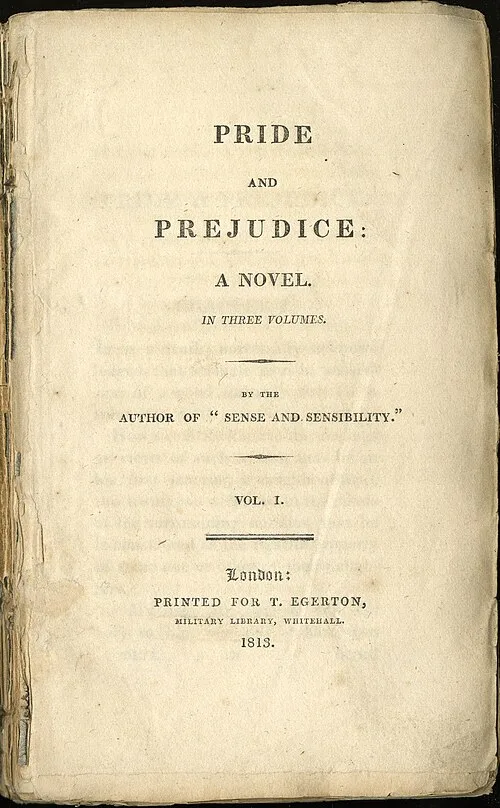
Pride and Prejudice by Jane Austen
Pride and Prejudice by Jane Austen is one of the most celebrated novels in English literature, admired for its sharp social commentary, memorable characters, and a timeless exploration of human relationships. First published in 1813, the novel revolves around issues of marriage, morality, money, and social class in early 19th-century England. Even today, Pride and Prejudice remains a staple text for literature students, competitive exams, and academic discussions because it combines engaging storytelling with deep psychological and social insight.
At its heart, Pride and Prejudice is not just a love story between Elizabeth Bennet and Mr. Darcy. It is a novel about growth—how individuals learn to overcome their flaws, challenge social expectations, and understand one another beyond first impressions. Jane Austen uses wit, irony, and realism to expose the rigid class structure of her society while still maintaining a light, conversational tone that feels surprisingly modern.
From an exam perspective, Pride and Prejudice
and Prejudice is rich in themes, character development, narrative
technique, and symbolism. Questions often focus on Austen’s treatment of
marriage, her feminist undertones, the contrast between pride and humility, and
the moral journey of the protagonists. This detailed study aims to cover all
these aspects in a clear, easy, and exam-friendly manner while keeping the
language casual and approachable.
About Jane Austen: Life and Literary Career
Jane Austen was born on December 16,
1775, in Steventon, Hampshire, England. She was the seventh of eight children
in a close-knit family where reading, discussion, and intellectual curiosity
were encouraged. Her father, George Austen, was a clergyman who owned a large
personal library, giving young Jane access to books that shaped her literary
imagination. Although Jane Austen never received formal higher education, her
sharp observation of human behavior and society became her greatest strength as
a writer.
Jane Austen lived during a time when
women had limited rights and few professional opportunities. Writing,
especially publishing novels, was not considered a respectable career for
women. As a result, her early novels were published anonymously, including Pride
and Prejudice, which was initially titled First Impressions. Despite
these challenges, Austen developed a unique narrative voice that blended
realism, irony, and social criticism.
Her major novels include Sense
and Sensibility, Pride and Prejudice, Mansfield Park, Emma,
Northanger Abbey, and Persuasion. Among these, Pride and
Prejudice remains the most popular and widely studied. Austen’s writing
focuses on everyday life, especially marriage and family, but beneath this
simple surface lies a powerful critique of class prejudice, gender inequality,
and moral rigidity. She died in 1817 at the age of 41, leaving behind a legacy
that continues to influence literature and popular culture.
Historical and Social Background of the Novel
Pride and Prejudice is set in Regency England, a period marked by strict social
hierarchy, inherited wealth, and limited social mobility. Society was deeply
divided into classes—the aristocracy, the landed gentry, professionals, and the
working class. Marriage during this time was often more about economic security
and social status than romantic love, especially for women.
Women had very few legal rights and
were financially dependent on men. Inheritance laws favored male heirs, which
explains why the Bennet family estate is entailed to Mr. Collins. This social
reality creates the central tension in the novel: the pressure on the Bennet
sisters to marry well. Jane Austen presents this background subtly, through
everyday conversations and domestic situations, rather than dramatic historical
events.
The novel also reflects changing
social values. The rise of the middle class challenged traditional aristocratic
authority. Characters like Mr. Darcy represent old wealth, while Mr. Bingley
symbolizes new money. Through their interactions, Pride and Prejudice
explores how merit, manners, and morality begin to matter as much as birth and
title.
Place of Pride and Prejudice in English Literature
In English literature, Pride and
Prejudice is considered a classic novel of manners. It focuses on social
behavior, relationships, and customs of a particular class and time. Jane
Austen’s realistic portrayal of ordinary life marked a shift from the romantic
and gothic novels popular before her.
The novel is also important for its
early feminist perspective. While Austen does not openly rebel against
patriarchy, she gives Elizabeth Bennet a strong, intelligent, and independent
voice. Elizabeth’s refusal to marry without respect and affection was radical
for its time and continues to resonate with modern readers.
Genre and Narrative Technique
Pride and Prejudice is a romantic novel, a social comedy, and a novel of
manners. Jane Austen uses a third-person omniscient narrator with frequent use
of free indirect discourse. This technique allows readers to understand
characters’ thoughts while maintaining narrative distance. Irony, especially
verbal and situational irony, is one of Austen’s strongest tools and plays a
major role in shaping the novel’s tone.
Detailed Plot Overview
The novel opens with one of the most
famous lines in English literature, immediately establishing marriage as its
central concern. The arrival of Mr. Bingley in the neighborhood sets off a
chain of social events that bring love, conflict, misunderstanding, and
self-realization. The plot develops gradually, focusing more on character
growth than dramatic action.
Volume I – Chapter-Wise / Scene-Wise Summary
Volume I introduces the Bennet
family and sets up the main conflicts of Pride and Prejudice. Mr. and
Mrs. Bennet have five daughters, and Mrs. Bennet is obsessed with marrying them
off to wealthy men. When Mr. Bingley rents Netherfield Park, excitement spreads
through the household.
At the Meryton assembly, Mr. Bingley
is well received, while Mr. Darcy appears proud and reserved. Darcy’s dismissal
of Elizabeth as “tolerable, but not handsome enough” creates her initial
prejudice against him. Jane and Bingley quickly develop mutual affection, but
social interference and misunderstandings begin to form barriers.
Elizabeth’s visit to Netherfield,
Darcy’s growing admiration for her intelligence, and the introduction of Mr.
Collins and George Wickham add complexity to the plot. Wickham’s false story
about Darcy further strengthens Elizabeth’s negative opinion of him.

Volume II – Chapter-Wise / Scene-Wise Summary
Volume II marks a turning point in Pride
and Prejudice. Mr. Collins proposes to Elizabeth, and she firmly rejects
him, showing her independence. Collins then marries Charlotte Lucas,
highlighting the contrast between practical and romantic views of marriage.
Elizabeth visits Charlotte and meets
Lady Catherine de Bourgh, Darcy’s domineering aunt. Darcy unexpectedly proposes
to Elizabeth, but she rejects him due to his pride and his role in separating
Jane and Bingley. Darcy’s explanatory letter becomes a crucial moment, forcing
Elizabeth to confront her own prejudice and reevaluate her judgments.
Volume III – Chapter-Wise / Scene-Wise Summary
In Volume III, Elizabeth’s visit to
Pemberley changes her perception of Darcy completely. His kindness and humility
reveal his true character. Lydia’s elopement with Wickham threatens the Bennet
family’s reputation, but Darcy secretly resolves the situation.
Bingley and Jane reunite, and Darcy
proposes again to Elizabeth, this time with mutual respect and understanding.
The novel ends with multiple marriages, reinforcing the idea that happiness
comes from self-awareness and moral growth rather than social pressure.

Major Characters and Traits
Character | Key | Role |
Elizabeth Bennet | Intelligent, witty, independent | Protagonist |
Mr. Darcy | Proud, honorable, reserved | Romantic hero |
Jane Bennet | Gentle, kind, optimistic | Ideal femininity |
Mr. Collins | Pompous, practical | Social satire |
Marriage as a Central Social Institution
In Pride and Prejudice by Jane
Austen, marriage is not treated as a purely romantic affair; instead, it is
shown as a social, economic, and moral institution. Austen presents different
types of marriages to highlight what she considers sensible and foolish unions.
Through these contrasts, she educates the reader—especially young women of her
time—about the importance of balance between love, respect, and financial
stability.
Charlotte Lucas’s marriage to Mr.
Collins represents a purely practical match. Charlotte believes happiness in
marriage is a matter of chance, and she prioritizes economic security over
emotional fulfillment. From an exam perspective, this marriage is often used to
show the harsh reality faced by women in Regency England. On the other hand,
Lydia Bennet’s reckless marriage to Wickham reflects immaturity and moral
irresponsibility. It nearly ruins the Bennet family’s reputation and serves as
a warning against impulsive decisions.
Jane and Bingley’s marriage
symbolizes ideal harmony—kindness, mutual affection, and social compatibility.
Finally, Elizabeth and Darcy’s relationship stands at the moral center of Pride
and Prejudice. Their marriage is based on love, respect, and personal
growth. Austen clearly suggests that the best marriages are those where
emotional connection and moral understanding outweigh social pressure and
wealth.

Women, Education, and Feminist Undertones
Although Jane Austen lived in a
deeply patriarchal society, Pride and Prejudice by Jane Austen subtly
challenges traditional gender roles. Elizabeth Bennet is portrayed as
intelligent, outspoken, and independent-minded—qualities not always encouraged
in women of her time. She values self-respect over financial security, which is
evident in her refusal of Mr. Collins and her initial rejection of Darcy.
Education in the novel is not formal
but moral and intellectual. Elizabeth’s wit, reading habits, and critical
thinking set her apart from characters like Lydia, who lacks discipline and
self-awareness. Austen implies that true refinement comes from character and
intellect, not accomplishments like music or drawing alone.
From an exam angle, Elizabeth is
often described as an early feminist figure. While she does not reject
marriage, she insists on equality within it. Austen does not argue for radical
social change but quietly promotes women’s right to choice, dignity, and self-expression.
Irony and Satire in Pride and Prejudice
Irony is one of the most powerful
literary tools in Pride and Prejudice by Jane Austen. The famous opening
line is an example of verbal irony, setting a humorous yet critical tone.
Austen frequently uses irony to expose social hypocrisy, foolish behavior, and
moral blindness.
Mr. Collins is a satirical character
who represents blind obedience to social hierarchy. His exaggerated respect for
Lady Catherine and his self-importance make him a comic figure. Similarly, Mrs.
Bennet’s obsession with marriage is humorous, yet it also reflects genuine
anxiety about her daughters’ futures.
Situational irony plays a major role
in the development of the plot. Darcy, who initially seems arrogant, turns out
to be morally upright, while Wickham, who appears charming, is deeply
dishonest. Elizabeth’s realization of her mistaken judgments highlights
Austen’s central message: first impressions are unreliable.
Symbolism in the Novel
Symbolism in Pride and Prejudice
by Jane Austen is subtle but meaningful. Pemberley, Darcy’s estate,
symbolizes his true character—orderly, generous, and refined. Elizabeth’s visit
to Pemberley marks a turning point in her feelings toward Darcy, showing how
physical settings reflect moral qualities.
Letters also serve as important
symbols. Darcy’s letter to Elizabeth represents truth and self-revelation. It
breaks down prejudice and initiates Elizabeth’s emotional growth. Similarly,
Lydia’s letter announcing her elopement symbolizes chaos and irresponsibility.
Key Quotations for Exams
Quotation | Significance |
“Till this moment, I never knew | Elizabeth’s self-realization |
“Vanity and pride are different | Theme of pride |
“Happiness in marriage is entirely | Practical view of marriage |
Why Pride and Prejudice Is Still Relevant
Even today, Pride and Prejudice
by Jane Austen resonates with readers because it explores universal
emotions—love, misunderstanding, pride, and growth. Social expectations may have
changed, but the struggle between personal desire and societal pressure remains
relevant.
Conclusion
Pride and Prejudice by Jane Austen remains a powerful examination of human nature, social values, and personal growth. Its lasting appeal lies in its realism, humor, and emotional depth. For exams, the novel offers rich material in themes, characters, and narrative technique, making it an essential text in English literature.
FAQs
on Pride and Prejudice by Jane Austen
FAQ
1: Why is Pride and Prejudice considered a novel of manners?
Because it focuses on social
behavior, etiquette, class relations, and marriage customs of Regency England,
portraying everyday life with realism and irony.
FAQ
2: Is Elizabeth Bennet a feminist character?
Yes, in a contextual sense. She
asserts independence, values self-respect, and refuses marriage without love,
making her an early feminist figure.
FAQ
3: How does Jane Austen use irony in the novel?
Austen uses verbal irony (opening
line), situational irony (Darcy’s true nature), and dramatic irony to critique
society and character flaws.
FAQ
4: What is the moral lesson of Pride and Prejudice?
The novel teaches that
self-knowledge, humility, and open-mindedness are essential for personal
happiness and healthy relationships.
FAQ
5: Why is Darcy’s letter important?
It acts as a turning point, breaking
Elizabeth’s prejudice and initiating her moral awakening.
FAQ
6: How does social class affect relationships in the novel?
Class influences judgments, marriage
prospects, and behavior, but Austen ultimately shows that moral worth is more
important than rank.
FAQ
7: Why does Elizabeth reject Mr. Collins?
She refuses a marriage based on
convenience alone, asserting her right to emotional fulfillment and
self-respect.
FAQ
8: What makes Elizabeth and Darcy’s marriage ideal?
Mutual respect, emotional growth,
moral understanding, and equality make their marriage the novel’s moral ideal.

“Welcome to EngLiteratureGuru. I am a dedicated and experienced University Lecturer, done my MS in English Literature with distinction, a literary scholar with a mission to simplify the world’s greatest English classics for students and enthusiasts. From the intricate verses of Modern Poetry to the dramatic depth of Shakespearean tragedies like Hamlet, I provide expert analysis, historical context, and exam-ready insights. My goal is to help you bridge the gap between reading a text and truly mastering its meaning.”