
Soliloquies in Hamlet
Soliloquies are the heart of Hamlet by William Shakespeare. Through soliloquies, Shakespeare allows the audience to enter Hamlet’s mind. These speeches reveal Hamlet’s inner conflict, emotional pain, philosophical depth, and moral struggle. Without soliloquies, Hamlet would lose its psychological power.
Shakespeare uses soliloquies to:
· Reveal Hamlet’s true thoughts
· Develop themes
· Show character growth
· Explore philosophy and morality
IF YOU WANT TO GET A DETALED DISCUSSION AND
EXTENSIVE STUDY ON PLAY ‘HAMLET’, YOU MAY FOLLOW THE LINK, https://engliteratureguru.com/hamlet-by-william-shakespeare-analysis/ .

Below are the most important soliloquies in Hamlet,
discussed in detail.
1. “O that this too too solid flesh would melt” (Act 1, Scene 2)
Context ( soliloquies in Hamlet)
This is Hamlet’s first soliloquy, delivered after King
Claudius and Queen Gertrude leave the court. Hamlet is alone and finally free
to express his true feelings.
Key Ideas ( soliloquies in Hamlet)
· Deep
grief over his father’s death
· Disgust
at his mother’s quick remarriage
· Desire
for death (without suicide)
· Moral
awareness and self-restraint
Hamlet wishes his body would “melt” away, showing his emotional exhaustion.
He feels betrayed by Gertrude, whom he believes has acted immorally. However,
Hamlet does not consider suicide acceptable because of religious beliefs.
Themes Highlighted ( soliloquies in Hamlet)
· Grief
and sorrow
· Corruption
and decay
· Appearance
vs reality
· Death
and morality
Literary Importance ( soliloquies in Hamlet)
This soliloquy establishes Hamlet as:
· Emotionally
sensitive
· Morally
conscious
· Intellectually
deep
It also introduces the recurring imagery of rot and decay, symbolizing moral
corruption in Denmark.
2. “O all you host of heaven! O earth!” (Act 1, Scene 5)
Context
This soliloquy occurs after Hamlet meets the ghost of his father, who
reveals the truth about his murder and demands revenge.
Key Ideas
· Shock
and emotional turmoil
· Anger
toward Claudius
· Commitment
to remember his father
· Confusion
and moral fear
Hamlet feels overwhelmed by the burden placed upon him. He promises to erase
all other memories and focus only on revenge. However, beneath this promise
lies uncertainty.
Themes Highlighted
· Revenge
· Duty
vs morality
· Memory
and obligation
Literary Importance
This soliloquy marks the moment when Hamlet’s life changes forever. The
demand for revenge creates inner conflict rather than clarity.
3. “O what a rogue and peasant slave am I!” (Act 2, Scene 2)
Context
After watching a player emotionally perform a speech about a fictional
tragedy, Hamlet criticizes himself for being unable to act despite having a
real reason.
Key Ideas
· Self-criticism
and guilt
· Anger
at his own inaction
· Desire
for proof of Claudius’s guilt
· Birth
of the play-within-the-play idea
Hamlet compares himself unfavorably to the actor and calls himself a coward.
He fears the ghost may be a devil trying to deceive him.
Themes Highlighted
· Action
vs inaction
· Appearance
vs reality
· Self-awareness
Literary Importance
This soliloquy shows Hamlet’s intelligence and strategic thinking. Instead
of acting blindly, he plans to confirm Claudius’s guilt.
4. “To be, or not to be: that is the question” (Act 3, Scene 1)
Context
This is the most famous soliloquy in English literature.
Hamlet is alone, reflecting deeply on life and death.
Key Ideas
· Questioning
existence
· Fear
of the unknown after death
· Human
suffering and endurance
· Moral
hesitation
Hamlet is not simply contemplating suicide; he is examining whether it is
nobler to endure life’s suffering or escape through death. Fear of the unknown
prevents action.
Themes Highlighted
· Death
and mortality
· Existentialism
· Action
vs inaction
Literary Importance
This soliloquy transforms Hamlet into a philosophical work. It
reflects universal human doubt and makes Hamlet a modern existential figure.
5. “’Tis now the very witching time of night” (Act 3, Scene 2)
Context
After confirming Claudius’s guilt through the play-within-the-play, Hamlet
prepares to confront his mother.
Key Ideas
· Emotional
intensity
· Desire
for action
· Control
over violence
Hamlet feels powerful and angry, but he restrains himself from becoming
cruel. He wants to speak sharply, not act violently.
Themes Highlighted
· Revenge
· Moral
restraint
· Self-control
Literary Importance
This soliloquy shows Hamlet balancing emotion and morality, reinforcing his
ethical nature.
6. “Now might I do it pat, now he is praying” (Act 3, Scene 3)
Context
Hamlet finds Claudius alone and praying. He has the perfect opportunity to
kill him.
Key Ideas
· Moral
hesitation
· Religious
conflict
· Fear
of sending Claudius to heaven
Hamlet decides not to kill Claudius while he is praying, believing that
would reward him spiritually.
Themes Highlighted
· Revenge
vs justice
· Religion
and morality
· Action
vs inaction
Literary Importance
This soliloquy is crucial to understanding Hamlet’s delay. His hesitation is
rooted in moral reasoning, not cowardice.
7. “How all occasions do inform against me” (Act 4, Scene 4)
Context
After seeing Fortinbras’s army willing to fight over a minor issue, Hamlet
reflects on his own delay.
Key Ideas
· Shame
over inaction
· Comparison
with Fortinbras
· Acceptance
of violent duty
Hamlet criticizes himself again and declares that his thoughts will now be
bloody.
Themes Highlighted
· Honor
· Action
vs inaction
· Masculinity
and duty
Literary Importance
This soliloquy signals Hamlet’s transformation. He moves closer to action.
8. “Alas, poor Yorick!” (Act 5, Scene 1) (Reflective
Monologue)
Context
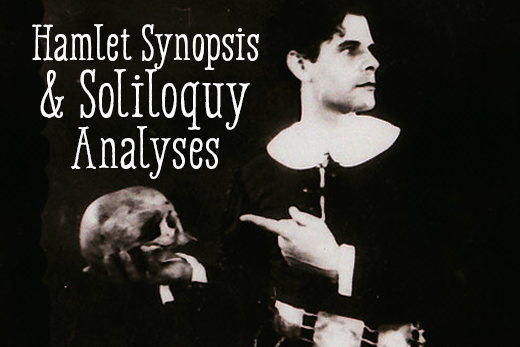
In the graveyard, Hamlet holds the skull of Yorick, the court jester.
Key Ideas
· Reflection
on death
· Equality
in mortality
· Loss
of childhood innocence
Hamlet realizes that death makes everyone equal—kings and clowns alike.
Themes Highlighted
· Death
and mortality
· Human
equality
· Time
and decay
Literary Importance
This moment shows Hamlet’s philosophical maturity and acceptance of fate.
Summary Table of Soliloquies
Soliloquy | Act & Scene | Central Focus |
O that this too too solid flesh | 1.2 | Grief |
O all you host of heaven | 1.5 | Duty |
O what a rogue and peasant slave | 2.2 | Self-criticism |
To be or not to be | 3.1 | Existence |
’Tis now the witching time | 3.2 | Moral restraint |
Now might I do it pat | 3.3 | Religious conflict |
How all occasions inform against me | 4.4 | Honor |
Alas, poor Yorick | 5.1 | Mortality |
Why Soliloquies Matter in Hamlet
Soliloquies transform Hamlet by William Shakespeare from a revenge
play into a psychological and philosophical masterpiece. They reveal the
complexity of human thought and emotion, making Hamlet one of the most
realistic characters in literature.

“Welcome to EngLiteratureGuru. I am a dedicated and experienced University Lecturer, done my MS in English Literature with distinction, a literary scholar with a mission to simplify the world’s greatest English classics for students and enthusiasts. From the intricate verses of Modern Poetry to the dramatic depth of Shakespearean tragedies like Hamlet, I provide expert analysis, historical context, and exam-ready insights. My goal is to help you bridge the gap between reading a text and truly mastering its meaning.”
Great article.