Introduction to King Lear
As
your literature tutor, let me tell you this clearly: King Lear is not
just a tragedy—it is one of the darkest and most profound plays ever written in
English literature. Written by William Shakespeare around 1605–1606,
the play explores universal human experiences such as power, aging, family
conflict, betrayal, suffering, madness, and redemption.
Unlike
other Shakespearean tragedies where a single fatal flaw leads to downfall, King
Lear presents a complete moral collapse of both family and state.
The play forces readers to question authority, justice, and human values. That
is why King Lear holds a central position in BA, MA, and competitive
examinations.

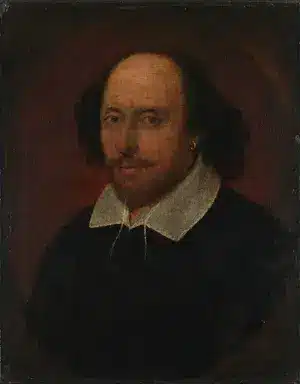
About the Writer: William
Shakespeare
Aspect | Details |
Full | William |
Born | April |
Died | April |
Literary | Elizabethan |
Genres | Tragedy, |
Famous | Hamlet, |
William
Shakespeare is universally regarded as the greatest dramatist in English
literature. His tragedies are admired for their deep psychological
insight, poetic language, and exploration of human nature.
In
King Lear, Shakespeare goes beyond personal tragedy and presents a cosmic
vision of suffering, where even the innocent are punished. This play marks
Shakespeare’s maturity as a tragic poet.
Historical and Literary
Background
King
Lear was written during the Jacobean period, a time marked by
political uncertainty, questions of kingship, and social hierarchy. The play
reflects: – Anxiety about succession and division of kingdoms –
Conflicts between authority and responsibility – The fragile nature of
family bonds
The
story is based on Geoffrey of Monmouth’s legendary account of King Leir,
but Shakespeare transforms the legend into a profound tragedy.
Detailed Summary of King
Lear (Act-by-Act & Scene-Wise)
Act I – The Fatal Love Test
King Lear decides to divide his
kingdom among his three daughters—Goneril, Regan, and Cordelia—based on
how well they express their love for him. Goneril and Regan flatter Lear
dishonestly, while Cordelia speaks honestly but briefly. Lear misinterprets her
sincerity as pride and disinherits her.
He banishes Kent, who
tries to defend Cordelia, and divides the kingdom between Goneril and Regan.
This act establishes Lear’s tragic flaw: blindness caused by pride.

Act II – Power Shifts and Betrayal
Lear begins to realize
his mistake as Goneril and Regan strip him of authority and dignity. Meanwhile,
the subplot develops: Edmund, the illegitimate son of Gloucester,
schemes against his brother Edgar and father.
Lear’s sense of identity
begins to collapse.
Act III – Madness and the Storm
(Climax)
This is the emotional
and dramatic climax of the play. Lear wanders into a violent storm, symbolizing
his inner chaos. He begins to understand human suffering and injustice.
Gloucester is
brutally blinded for helping Lear. The play reaches its darkest moment.

Act IV – Suffering and Realization
Lear, now mad but wiser,
reunites with Cordelia, who forgives him. Edgar, disguised as Poor Tom, guides
his blinded father Gloucester.
This act emphasizes redemption
through suffering.
Act V – Tragic Resolution
Edmund is defeated, but too late.
Cordelia is hanged, and Lear dies holding her body. Justice is incomplete, and
the play ends in deep tragedy.
Major Themes in King
Lear – Complete Tutor-Guided Study
1. Blindness vs. Insight (Central
Theme)
One of the most
important themes in King Lear is the contrast between blindness and
insight. Shakespeare uses both literal and metaphorical blindness to show
how human beings fail to see the truth when they are blinded by pride, power,
and prejudice.
King Lear is
emotionally and morally blind at the beginning of the play. He cannot
distinguish between flattery and genuine love. Goneril and Regan’s
exaggerated speeches deceive him, while Cordelia’s honest silence angers him.
Lear’s blindness is rooted in pride and authority—he believes that love
must be loudly expressed.
Similarly,
Gloucester is blind to Edmund’s true nature and trusts him blindly while
rejecting his loyal son Edgar. Gloucester’s physical blinding later in the play
symbolizes his moral blindness earlier. Only after losing his eyes does he gain
insight.
Shakespeare
suggests that suffering is the price of wisdom. True understanding comes
only after loss, humiliation, and pain.
2. Power, Authority, and Responsibility
King Lear
explores the idea that power without responsibility leads to chaos. Lear makes
the fatal mistake of dividing his kingdom while still expecting the respect and
authority of a king.
By giving political
power to Goneril and Regan, Lear destroys the natural order. Once power shifts,
the daughters treat him as a burden rather than a father. Shakespeare warns
that authority must be accompanied by moral responsibility and wisdom.
The play reflects
Jacobean concerns about kingship and succession. A ruler who fails to govern
wisely invites disorder not only in the state but also in family relationships.
3. Family, Love, and Betrayal
Family relationships form the
emotional core of King Lear. The play shows how selfish ambition
destroys natural bonds between parents and children.
Cordelia represents true love,
which is quiet, loyal, and selfless. In contrast, Goneril and Regan represent false
love, driven by greed and ambition. Their betrayal of Lear exposes the
cruelty hidden beneath polite behavior.
The Gloucester subplot mirrors
Lear’s story, reinforcing the idea that betrayal is a universal human weakness.
4. Nature vs. Civilization
Shakespeare contrasts the
artificial rules of civilization with the raw forces of nature. The storm
scenes symbolize a world stripped of social order.
When Lear is exposed to the
storm, he confronts his own humanity. He realizes that kings and beggars are
equal in suffering. Nature becomes a teacher, revealing harsh truths about life
and injustice.
5. Madness and Sanity
Madness in King Lear is closely
connected to truth. Lear’s madness frees him from pride and allows him to speak
honestly. Edgar’s feigned madness as Poor Tom highlights the thin line between
sanity and insanity.
Ironically, those considered “mad”
often speak the deepest truths, while the so-called sane characters act cruelly
and irrationally.
6. Justice, Fate, and the Gods
The play raises disturbing
questions about divine justice. Innocent characters like Cordelia suffer, while
villains prosper temporarily.
Shakespeare does not offer easy
answers. Instead, he presents a tragic universe where justice is uncertain,
forcing humans to rely on compassion rather than divine intervention.
Character Analysis –
Complete Exam-Oriented Discussion
King Lear (Tragic Hero)
King Lear is one of Shakespeare’s
greatest tragic heroes. His tragic flaw is pride mixed with emotional
blindness. He believes authority guarantees love and respect.
Lear’s journey is a movement from
power to helplessness, from blindness to insight. His suffering humanizes him.
By the end, he becomes capable of love, humility, and forgiveness, especially
toward Cordelia.
However, Lear’s realization comes
too late. His death holding Cordelia’s body represents the ultimate
tragedy—wisdom gained at the cost of everything.
Cordelia
Cordelia represents truth, moral integrity, and
unconditional love. Her refusal to flatter Lear reflects honesty rather than
disobedience.
Cordelia’s forgiveness of Lear highlights
Christian values of mercy and compassion. Her death emphasizes the cruelty of
the tragic world.

Goneril and Regan
Goneril and Regan symbolize ambition,
cruelty, and moral corruption. Their rejection of parental bonds reflects a
breakdown of natural order.
Their rivalry and eventual destruction
suggest that evil is self-destructive.
Gloucester
Gloucester parallels Lear. His blindness—both
literal and moral—teaches him humility. Through suffering, he learns loyalty
and compassion.
Edmund
Edmund is a complex villain driven by resentment
against social injustice. As an illegitimate son, he challenges traditional
hierarchy.
Although cruel and manipulative, Edmund reflects
the dark consequences of a rigid social system.
Edgar
Edgar represents patience, endurance, and moral
strength. His disguise as Poor Tom allows him to guide others toward truth.
Literary Devices and
Techniques – Detailed Study
Device | Detailed |
Tragic | Lear |
Symbolism | Storm |
Parallel | Lear–Gloucester |
Blank | Adds |
Imagery | Nature |
——|————|
| Tragic Irony | Lear misjudges his daughters | | Symbolism | Storm, blindness,
animals | | Parallel Plot | Lear–Gloucester subplot | | Blank Verse | Poetic
intensity |
Critical Analysis and
Scholarly Interpretations
Tragedy of Suffering
Many critics view King Lear as
a tragedy where suffering itself is central. Characters learn through pain
rather than moral choice.
Political Interpretation
The play warns against
irresponsible leadership. The division of the kingdom leads to civil disorder.
Existential Reading
Modern critics interpret King Lear
as an exploration of a meaningless universe where humans must create their own
values.
Importance of King Lear
in English Literature
King
Lear represents the peak of Shakespeare’s tragic vision. Its psychological
depth, complex structure, and philosophical intensity make it one of the most
studied plays in English literature.
The
play influenced modern dramatists such as Samuel Beckett and Arthur
Miller, especially in its portrayal of suffering and moral uncertainty.
Conclusion
King Lear is a devastating exploration of human
weakness, love, power, and suffering. Shakespeare presents a tragic world where
wisdom comes through pain and justice is uncertain.
For students of English literature, King Lear is
essential not only for examinations but also for understanding the darker
truths of human existence.
FAQs
1. Why is King Lear considered a great tragedy?
King Lear is considered a great tragedy because it presents intense human suffering caused by pride, moral blindness, and misuse of power. The play does not offer a comforting moral ending; instead, it exposes the harsh realities of life, making it one of Shakespeare’s most profound tragedies.
2. What is King Lear’s tragic flaw?
King Lear’s tragic flaw is pride combined with emotional blindness. He cannot distinguish between true love and false flattery, which leads to his downfall.
3. What is the significance of the storm scene in King Lear?
The storm scene symbolizes Lear’s inner turmoil and the collapse of social and moral order. It also marks the beginning of Lear’s self-realization and emotional growth.
4. Why does Shakespeare use a subplot in King Lear?
The Gloucester subplot mirrors Lear’s story and reinforces the major themes of blindness, betrayal, and suffering. It deepens the tragic impact of the play.
5. Is King Lear a tragedy of fate or character?
King Lear is mainly a tragedy of character. Lear’s suffering results from his own decisions, though fate and chance also play a role in intensifying the tragedy.
6. What role does Cordelia play in King Lear?
Cordelia represents truth, integrity, and unconditional love. She serves as the moral center of the play and highlights the contrast between genuine and false affection.
7. How does King Lear reflect political ideas of Shakespeare’s time?
The play reflects Jacobean concerns about kingship, succession, and authority. Shakespeare warns that poor leadership can lead to political and social chaos.
8. Why is Edmund considered a complex villain?
Edmund is complex because his ambition is driven by resentment against social injustice related to illegitimacy. He is not purely evil but shaped by society’s rigid class system.
9. What does blindness symbolize in King Lear?
Blindness symbolizes the inability to see truth and reality. Both Lear and Gloucester gain insight only after experiencing suffering.
10. Why is the ending of King Lear so tragic?
The ending is tragic because Cordelia, an innocent character, dies, and Lear gains wisdom too late. The play offers no complete justice, emphasizing the cruelty of the tragic world.

“Welcome to EngLiteratureGuru. I am a dedicated and experienced University Lecturer, done my MS in English Literature with distinction, a literary scholar with a mission to simplify the world’s greatest English classics for students and enthusiasts. From the intricate verses of Modern Poetry to the dramatic depth of Shakespearean tragedies like Hamlet, I provide expert analysis, historical context, and exam-ready insights. My goal is to help you bridge the gap between reading a text and truly mastering its meaning.”