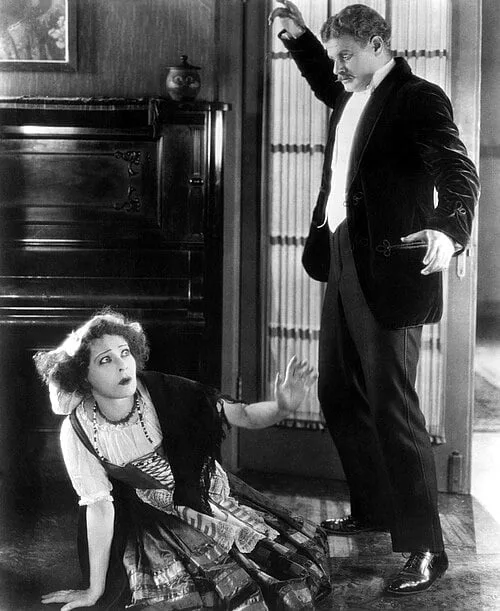
Realism in Modern Drama
Definition · Historical Background · Key Features · Major Dramatists, Naturalism · South Asian Context and Legacy
By Tehseen Fatima | MS English Literature (Distinction) | University Lecture EngLiteratureGuru.com
Updated May 2026
Introduction
When we talk
about realism in modern drama, we are talking about a revolution — not the loud kind with swords and fire, but the quiet kind that permanently changed what happens on stage. Before realism entered the theatre, drama was filled with kings, gods, exaggerated villains, and poetic speeches that nobody actually spoke in real life. Then, suddenly, everyday people walked onto the stage. They argued about money. They worried about marriage. They felt trapped in social systems. They sounded real.
Realism in modern drama emerged in the late nineteenth century and completely transformed theatrical storytelling. Instead of romantic fantasies or heroic tragedies, playwrights began presenting ordinary life with psychological depth and social awareness. The drawing room replaced the palace. The middle class replaced royalty. Dialogue became conversational rather than poetic.
What makes realism in modern drama so enduringly powerful is its honesty. It does not try to escape reality — it confronts it. It exposes social hypocrisy, questions morality, and dives deep into the psychology of individuals. Major dramatists like Henrik Ibsen, Anton Chekhov, George Bernard Shaw, Eugene O’Neill, and Arthur Miller shaped this movement and left a permanent mark on world literature.
This comprehensive guide explores the definition, historical roots, key features, major playwrights, relationship with naturalism, South Asian dimension, and lasting legacy of realism in modern drama.
What Is Realism in Modern Drama? — Definition and Overview
Realism in
modern drama is a literary and theatrical movement that aims to represent human
life truthfully — without exaggeration, romanticisation, or moral
simplification. It presents characters who behave as real human beings do: with
contradictions, psychological complexity, social pressures, and moral
ambiguity.
Unlike
classical drama, where characters often symbolise moral absolutes (the noble
hero, the scheming villain), realism in modern drama presents flawed
individuals. People make mistakes. They struggle. They contradict themselves.
If something happens in a realistic play, it feels inevitable — not theatrical.
Quick Realism in modern drama |
Historical Background: How Realism in Modern Drama Emerged
To understand
realism in modern drama, we must step back into nineteenth-century Europe.
Society was changing at an unprecedented pace. Three intellectual earthquakes
reshaped how people understood the world:
•
Charles Darwin (On the Origin of Species,
1859): Challenged divine creation and introduced natural selection —
suggesting humans are shaped by biology and environment, not divine decree.
•
Karl Marx (Das Kapital, 1867): Exposed
the inequalities of industrial capitalism and questioned class structures long
taken for granted.
•
Sigmund Freud (1890s onward): Introduced the
unconscious mind, revealing that human behaviour is driven by hidden
psychological forces — not simply rational will or moral choice.
In such a
climate, art could not remain artificial. The theatre had to reflect reality.
Earlier dramatic traditions — Romanticism and melodrama — had focused on
heightened emotion and improbable plots. But audiences were ready for something
more truthful. They wanted to see themselves on stage.
Henrik Ibsen’s A
Doll’s House (1879) is considered the founding text of this revolution.
When Nora Helmer declares:
“I must stand quite alone, if I am to understand myself and everything about me.” — Nora, A Doll’s House — Henrik Ibsen (1879)
…it shocked
audiences across Europe. A woman leaving her husband and children? That was
revolutionary. This shift marked the birth of realism in modern drama as a
serious literary movement. Theatre was no longer mere entertainment — it had
become a platform for debate, critique, and reform.
Key Features of Realism in Modern Drama
The features of
realism in modern drama distinguish it from every earlier dramatic form.
Together, they create a theatrical language built on authenticity rather than
spectacle.
1. Ordinary Characters in Ordinary Situations
Realistic plays
feature teachers, doctors, housewives, and businessmen — people audiences
recognise from daily life. The conflicts are domestic, social, and
psychological. Arthur Miller’s Willy Loman is not a king — he is a tired
salesman who cannot pay his mortgage. Yet his story carries the weight of Greek
tragedy. This democratisation of drama was radical: it declared that ordinary
lives deserve the stage.
2. Psychological Complexity
Characters are
neither purely good nor purely evil. They are layered — they love and hurt
simultaneously. This moral ambiguity is the hallmark of realistic drama. We
understand characters even as we judge them, and this tension is what keeps
audiences engaged long after the curtain falls.
3. Social Criticism as Central Purpose
Realism in
modern drama is never content merely to entertain. It exposes and questions:
•
Gender inequality and the oppression of women in
marriage (Ibsen’s A Doll’s House, Hedda Gabler)
•
Class exploitation and capitalism’s psychological toll
(Miller’s Death of a Salesman, O’Neill’s The Hairy Ape)
•
Racial injustice and systemic exclusion (Hansberry’s A
Raisin in the Sun, 1959)
•
Religious hypocrisy and social respectability (Ibsen’s Ghosts,
Shaw’s Major Barbara)
4. Natural, Conversational Dialogue
Before realism,
stage dialogue was declamatory and artificial. Realistic drama changed this:
characters pause, repeat themselves, talk past each other. What characters do
not say is often more meaningful than what they do say — a technique
Chekhov mastered with brilliant economy.
5. The Box Set and Realistic Stage Design
The box set — a
stage designed as a real room with three walls, furniture, and everyday objects
— replaced painted backdrops. Audiences felt they were looking through a fourth
wall into a real home. This convention remains the dominant staging form in
mainstream theatre, film, and television worldwide.
6. Cause-and-Effect Plot Construction
Melodrama
relied on improbable coincidences. Realistic drama rejects this entirely.
Events unfold because of what characters choose, believe, and do. The past is
always present. This structural logic gives realistic drama its sense of
inevitability and psychological weight.
7. Rejection of the Idealised Hero
Realism
replaces the noble hero with the flawed human being. There are no perfect
characters in Ibsen, Chekhov, or Miller — only people struggling with forces
larger than themselves. This shift gave ordinary lives their proper dignity on
the stage.
Major Dramatists of Realism in Modern Drama
Henrik Ibsen (1828–1906) — The Father of Modern Drama
No discussion
of realism in modern drama is complete without Ibsen. A Norwegian playwright of
the mid-to-late nineteenth century, Henrik Ibsen single-handedly established the
conventions of realistic drama that writers still follow today. His major
plays: A Doll’s House (1879), Ghosts (1881), An Enemy of the
People (1882), Hedda Gabler (1890).
“I am half inclined to think we are all ghosts. It is not only what we have inherited from our fathers and mothers that exists again in us, but all sorts of old dead ideas and all kinds of old dead beliefs.”
— Mrs Alving, Ghosts — Henrik Ibsen (1881)
Ibsen’s realism
was moral realism. He exposed societal lies and showed characters struggling
against invisible social pressures — convention, respectability, inherited
duty. Because of Ibsen, realistic drama became a platform for social debate and
genuine reform.
Anton Chekhov (1860–1904) — The Master of Psychological Realism
Where Ibsen
challenged society through confrontational plots, Chekhov transformed realism
through restraint and psychological nuance. In his major plays — The Seagull
(1896), Uncle Vanya (1897), Three Sisters (1901), The Cherry
Orchard (1904) — dramatic events are minimal. The real drama happens
internally. Characters dream of change but are paralysed.
“If only we could know, if only we could know!”
— Olga, Three Sisters — Anton Chekhov (1901)
Chekhov
pioneered the technique of subtext — the gap between what characters say and
what they mean. His work directly inspired Konstantin Stanislavski’s acting
system, the foundation of all modern naturalistic performance training.
George Bernard Shaw (1856–1950) — The Intellectual Provocateur
Shaw added wit,
satirical intelligence, and explicit social argument to realism. His key plays
— Mrs Warren’s Profession (1893), Pygmalion (1913), Major
Barbara (1905) — combine realistic character drawing with sharp ideological
debate. Shaw won the Nobel Prize for Literature in 1925.
“The
reasonable man adapts himself to the world; the unreasonable one persists in
trying to adapt the world to himself. Therefore all progress depends on the
unreasonable man.” — George Bernard Shaw, Man and Superman
(1903)
Eugene O’Neill (1888–1953) — American Realism and the Tragic Self
O’Neill brought
realism to America with an intensity shaped by his own turbulent biography. His
masterpiece, Long Day’s Journey into Night (written 1941–42, staged
1956), is a devastating autobiographical portrait of addiction, family
dysfunction, and the impossibility of escape. O’Neill won the Nobel Prize for
Literature in 1936.
“None of us can help the things life has done to us. They’re done before you realize it, and once they’re done they make you do other things until at last everything comes between you and what you’d like to be.”
— Edmund, Long Day’s Journey into Night — Eugene O’Neill
Arthur Miller (1915–2005) — Realism as Social Conscience
Miller used
realism as a vehicle for political and social critique. Death of a Salesman
(1949) exposes the American Dream as a myth that destroys ordinary men. The
Crucible (1953) uses the Salem witch trials as an allegory for McCarthyite
persecution. Miller’s realism insists that the personal and the political are
inseparable.
“I am not a dime a dozen! I am Willy Loman, and you are Biff Loman!”
— Willy Loman, Death of a Salesman — Arthur Miller (1949)
Comparison Table: Major Realist Dramatists at a Glance
Playwright | Country | Style | Major Work | Central Theme | Period |
Henrik Ibsen | Norway | Moral Realism | A Doll’s House | Gender & | 1860s–1900s |
Anton Chekhov | Russia | Psychological | Three Sisters | Existential Longing | 1880s–1904 |
G. B. Shaw | Ireland/UK | Satirical | Pygmalion | Class & | 1890s–1940s |
Eugene O’Neill | USA | Tragic | Long Day’s Journey | Family & Addiction | 1910s–1950s |
Arthur Miller | USA | Political | Death of a | American Dream | 1940s–2000s |
Naturalism in Modern Drama — Definition, Origins and Key Features
Naturalism is a
dramatic movement closely related to realism but philosophically distinct. It
emerged in the 1870s and 1880s, largely through the theoretical writings of
French novelist and critic Emile Zola. In his influential essay The
Experimental Novel (1880), Zola argued that the writer should observe human
life the way a scientist observes nature — with clinical objectivity, without
sentimentality or moral judgement.
Naturalism
rests on a core philosophical belief: human beings are not free agents making
moral choices. Instead, they are determined by forces they cannot
control — heredity (biology), environment (social conditions), and
circumstance. The naturalistic playwright does not ask, ‘What should this
character do?’ but rather, ‘Given these conditions, what must this
character do?’
Origins of Naturalism in Drama
Zola’s ideas
influenced a generation of European playwrights. He himself adapted his novel Therese
Raquin for the stage in 1873 as an early naturalistic experiment. But it
was the Swedish playwright August Strindberg who produced the definitive
naturalistic drama.
“Miss Julie is the first naturalistic tragedy in Swedish drama… I have tried to make my tragedy a thoroughly modern psychological study.”
— August Strindberg, Preface to Miss Julie (1888)
In Miss
Julie (1888), a young aristocratic woman is destroyed in a single night by
the combined forces of her class position, her sexuality, her upbringing, and
the social system she inhabits. She has no moral exit — she is consumed by
forces larger than herself. This is the defining difference between naturalism
and realism: Nora Helmer chooses to leave; Miss Julie has no such choice.
Key Features of Naturalism in Modern Drama
•
Scientific Determinism: Human behaviour is
explained by heredity and environment, not free will.
•
Pessimistic Outlook: Outcomes are often tragic
and inevitable; characters cannot escape their conditions.
•
Clinical Objectivity: The playwright observes
without moral comment, as a scientist observes an experiment.
•
Extreme Verisimilitude: Every detail of setting,
dialogue, and behaviour is as close to observable reality as possible.
•
Focus on the Marginalised: Naturalistic drama
often depicts the poor, the crushed, and the socially excluded.
Realism vs. Naturalism — Detailed Comparison Table
Students
frequently confuse realism and naturalism because they share a commitment to
truthful representation. The following table clarifies their key differences:
Feature | Realism | Naturalism |
Core Belief | Life can be | Human |
Character Agency | Characters make choices; | Characters are controlled by |
Tone | Critical but | Often |
Purpose | Social critique and moral | Scientific observation; to |
Key Theorist | No single | Emile Zola |
Key Playwright | Ibsen, Chekhov, Shaw, Miller | August Strindberg, Maxim |
Example Play | A Doll’s House | Miss Julie — |
Staging | Realistic box set; detailed | Maximum environmental |
In short:
realism asks, ‘What should we do about our society?’ Naturalism asks, ‘What
does society inevitably do to us?’ Both are essential traditions, and most
major realistic plays contain naturalistic elements — the two movements exist
on a continuum rather than in strict opposition.
Application of Naturalism in Modern Drama — Examples and Analysis
Understanding
naturalism in practice requires examining how its principles manifest in
specific plays and theatrical traditions.
August Strindberg’s Miss Julie (1888) — The Definitive Naturalistic Play
Over a single
night — Midsummer Eve — the aristocratic Miss Julie and her father’s valet Jean
become entangled in a sexual and class conflict that destroys her. Strindberg
removes the act break to maintain psychological continuity. Julie’s destruction
is presented not as a moral failing but as the inevitable consequence of who she
is and what her world has made her. Her suicide is the logical conclusion of
naturalistic determinism.
Maxim Gorky’s The Lower Depths (1902) — Naturalism and Social Poverty
Gorky’s play
presents a group of destitute people living in a basement shelter in Tsarist
Russia. There is almost no conventional plot — only the accumulating weight of
poverty, despair, and crushed humanity. The characters cannot escape because
the social system that produced them offers no exit. The play is an
uncompromising document of what class society does to human beings at the
bottom.
Eugene O’Neill’s The Hairy Ape (1922) — Industrial Naturalism
O’Neill blends
naturalism with Expressionism in this portrait of Yank, a ship’s stoker
confronted with his own social invisibility. When a wealthy woman recoils from
him in horror, Yank’s sense of belonging is destroyed. He cannot belong to the
working class (too primitive) or to polite society (not human enough). O’Neill
uses naturalistic dialogue and environment to explore the deterministic forces
of industrial capitalism.
Contemporary Application: Verbatim Theatre
Contemporary
verbatim theatre — plays built from real interviews and transcripts — is
naturalism’s most direct modern descendant. Productions like The Laramie
Project (2000) and London Road (2011) apply naturalistic principles:
human speech exactly as spoken, without beautification; environments documented
rather than imagined; the pressure of social forces on individual lives
rendered without sentimentality.
Major Themes in Realism in Modern Drama
1. Marriage, Gender, and Women’s Freedom
From Nora
slamming the door in A Doll’s House to Blanche DuBois’s breakdown in A
Streetcar Named Desire, realistic drama has always been preoccupied with
the condition of women. It revealed that the ‘ideal’ Victorian marriage often
concealed female subjugation, economic dependency, and emotional violence.
2. Class Struggle and Economic Pressure
Willy Loman’s
mortgage, the Prozorov family’s lost gentility, the aristocracy losing The
Cherry Orchard to a former serf — all dramatise how economic forces shape
and destroy lives. Realism insists that class is constructed, not natural, and
its costs fall hardest on those without power.
3. Illusion versus Reality
Characters in
realistic drama tell themselves stories — about their marriages, their worth,
their futures — that are not true. Ibsen called these ‘life-lies’ (livslogn).
When reality breaks through, the drama begins. O’Neill’s The Iceman Cometh
(1946) is built entirely on this tension between pipe dreams and unbearable
truth.
4. Individual versus Society
Realistic drama
consistently shows individuals crushed or compromised by social institutions —
the family, the church, the state, the marketplace. Dr Stockmann in An Enemy
of the People stands alone against a corrupt community. This conflict
between individual conscience and social conformity remains one of drama’s most
urgent and timely subjects.
5. Identity and Self-Knowledge
Who am I,
beyond what society has made me? This question drives Nora’s departure, Willy
Loman’s desperate self-assertion, and Hedda Gabler’s destructive boredom.
Realistic drama explores the painful gap between who we are and who we wish to
be — a theme as urgent today as in 1879.
Realism in Modern Drama in South Asia and Pakistan
The influence
of realism in modern drama extended well beyond Europe and America. In South
Asia — the Indian subcontinent and what became Pakistan after 1947 — the
realistic tradition took root through several important channels.
The Indian People’s Theatre Association (IPTA)
Founded in
1943, the Indian People’s Theatre Association brought together playwrights,
directors, and performers committed to socially engaged, realistic drama. IPTA
productions addressed poverty, communal violence, colonial exploitation, and
class inequality with the directness of Ibsen and Shaw. Playwright Bijon
Bhattacharya’s Nabanna (1944) portrayed the Bengal famine with raw,
naturalistic power that shocked and galvanised audiences across the
subcontinent.
The Progressive Writers’ Movement and Urdu Drama
In Urdu theatre
— central to the literary culture of both Pakistan and India — the realistic
tradition was absorbed and transformed. The Progressive Writers’ Movement
(Anjuman Taraqqi Pasand Musannifin), founded in 1936, championed realism as a
tool for social critique across fiction, poetry, and drama. Imtiaz Ali Taj’s Anarkali
(1922), while romantic in subject, used realistic dialogue and psychological
characterisation that reflected Ibsen’s influence on the Urdu literary world.
Pakistani Television Drama: A Realistic Tradition
Pakistan’s
richest contribution to the realistic dramatic tradition has come through
television drama. From the 1970s onward, Pakistan Television (PTV) produced
work that rivals anything in the world for its realistic portraiture of
domestic life, class conflict, and social pressure:
•
Waris (1979, written by Amjad Islam
Amjad): A landmark realistic drama exploring feudal power, inheritance, and
family conflict in rural Punjab — directly comparable to Ibsen’s examination of
social systems.
•
Dhoop Kinare (1987, written by Haseena
Moin): A masterpiece of psychological realism exploring professional life,
gender dynamics, and personal identity in urban Pakistan.
•
Alpha Bravo Charlie (1998, directed by
Shoaib Mansoor): Realistic portraiture of military life, friendship, and
national identity — combining social observation with psychological depth.
•
Humsafar (2011, written by Farhat
Ishtiaq): Demonstrates the continuing power of realistic domestic drama in
contemporary Pakistani television, drawing on the same themes of marriage,
betrayal, and identity that Ibsen explored in 1879.
The realistic
tradition in South Asian and Pakistani drama is not derivative — it is a
living, adaptive tradition that has taken the tools of European realism and
applied them to distinctly local social realities: feudalism, patriarchy,
religious conservatism, and the pressures of modernisation.
The Impact and Legacy of Realism in Modern Drama
Modern theatre
owes its existence to realism. Even the experimental movements that followed
defined themselves in reaction to the realistic tradition:
•
Bertolt Brecht’s Epic Theatre: Developed the
‘alienation effect’ (Verfremdungseffekt) specifically to break the emotional
identification that realistic drama creates — proving realism’s power by trying
to undo it.
•
Theatre of the Absurd: Beckett’s Waiting for
Godot (1952) strips away realistic plot and character but exists in direct
conversation with the tradition it departs from.
•
Stanislavski’s Acting System: The foundation of
all modern acting training, including the American Method — developed to serve
the psychological demands of realistic drama.
•
Screen Drama: Television and film rely
overwhelmingly on the conventions of realistic drama. From The Wire to Normal
People to contemporary Pakistani drama, the realistic tradition is omnipresent
and essential.
•
Verbatim and Documentary Theatre: The most
contemporary form of naturalistic drama — plays built from real transcripts and
interviews — continues the commitment to unvarnished truth that Zola and Ibsen
pioneered.
Frequently Asked Questions (FAQs)
1. What is realism in modern drama?
Realism in
modern drama is a theatrical and literary movement originating in the late
nineteenth century that presents ordinary people, everyday conflicts, and
social realities with psychological truthfulness and moral complexity. It
replaced the artificial conventions of Romanticism with lifelike dialogue,
believable characters, and situations audiences could recognise from their own
lives.
2. Who is the father of realism in modern drama?
Henrik Ibsen
(1828–1906) is universally regarded as the father of realism in modern drama.
His plays — particularly A Doll’s House (1879) and Ghosts (1881)
— established the defining conventions of realistic theatre and transformed
drama into a vehicle for social critique.
3. What are the key features of realism in modern drama?
The key
features are: ordinary, middle-class characters; natural and conversational
dialogue; psychological complexity; social and moral critique; detailed,
lifelike stage settings (the box set); cause-and-effect plot construction that avoids
dramatic coincidence; and the rejection of the idealised hero.
4. What is naturalism in modern drama?
Naturalism is a
related but distinct movement, theorised by Emile Zola, which applies
scientific determinism to drama. Naturalistic plays present characters as
products of heredity and environment, with little or no moral agency. August
Strindberg’s Miss Julie (1888) is the defining example.
5. How is realism different from naturalism in drama?
Realism allows
characters moral choice and focuses on social critique with the possibility of
change. Naturalism emphasises that human behaviour is determined by forces
beyond the individual’s control, producing a more pessimistic and
scientifically observational drama. Both share a commitment to truthful representation,
but their philosophical premises and dramatic outcomes differ significantly.
6. How is realism in modern drama relevant to Pakistani students?
Pakistani
television drama is one of the world’s richest examples of the realistic
dramatic tradition. From PTV’s golden era productions to contemporary drama
series, Pakistani drama has consistently applied realism’s tools —
psychological depth, social critique, domestic conflict, and moral complexity —
to distinctly local cultural realities. Studying European realism helps
students understand the formal tradition their own culture’s drama belongs to.
7. What is the fourth wall in realistic drama?
The fourth wall
is the invisible barrier between the stage and the audience in realistic
theatre. Actors behave as if no audience is watching, creating the illusion
that viewers are observing real life. This convention became fundamental to
realistic performance and remains the default in mainstream film and television
worldwide.
Conclusion: Why Realism in Modern Drama Remains Powerful
Realism in
modern drama changed theatre by demanding honesty. It replaced illusion with
introspection. It brought ordinary people onto the stage and gave their
struggles the dignity they deserved.
Through Ibsen’s
moral courage, Chekhov’s quiet despair, Shaw’s satirical intelligence,
O’Neill’s raw intensity, and Miller’s social conscience, realism in modern
drama became more than a style — it became a movement of truth. Naturalism
extended this project, insisting that truth must include the most uncomfortable
deterministic realities of human existence.
From the
drawing rooms of nineteenth-century Norway to the television screens of
twenty-first-century Pakistan, the realistic tradition has proved itself
endlessly adaptable. It speaks to every society that contains injustice, every
family that contains contradiction, and every individual who has ever asked:
who am I, beyond what the world has made me?
The stage
stopped pretending — and started reflecting us.
References and Further Reading
Primary Sources
1.
Ibsen, Henrik. A Doll’s House (1879). Trans.
Michael Meyer. Methuen Drama, 1985.
2.
Ibsen, Henrik. Ghosts (1881). Trans. Peter Watts.
Penguin Classics, 1964.
3.
Chekhov, Anton. Three Sisters (1901). Trans.
Michael Frayn. Methuen Drama, 2003.
4.
Shaw, George Bernard. Pygmalion (1913). Penguin
Classics, 2003.
5.
O’Neill, Eugene. Long Day’s Journey into Night
(written 1941–42; staged 1956). Yale University Press, 2002.
6.
Miller, Arthur. Death of a Salesman (1949).
Penguin Classics, 1998.
7.
Strindberg, August. Miss Julie (1888). Trans.
Michael Meyer. Methuen Drama, 1964.
8.
Zola, Emile. The Experimental Novel (1880).
Trans. Belle Sherman. Scholarly Press, 1964.
Secondary Scholarship
9.
Williams, Raymond. Drama from Ibsen to Brecht.
Pelican Books, 1968.
10.
Styan, J. L. Modern Drama in Theory and Practice,
Vol. 1: Realism and Naturalism. Cambridge University Press, 1981.
11.
Brustein, Robert. The Theatre of Revolt.
Atlantic Monthly Press, 1964.
12.
Innes, Christopher. Modern British Drama: The
Twentieth Century. Cambridge University Press, 2002.
13.
Anjum, Rauf. Urdu Drama: History and Criticism.
Majlis-e-Taraqqi-e-Adab, Lahore, 1986.

“Welcome to EngLiteratureGuru. I am a dedicated and experienced University Lecturer, done my MS in English Literature with distinction, a literary scholar with a mission to simplify the world’s greatest English classics for students and enthusiasts. From the intricate verses of Modern Poetry to the dramatic depth of Shakespearean tragedies like Hamlet, I provide expert analysis, historical context, and exam-ready insights. My goal is to help you bridge the gap between reading a text and truly mastering its meaning.”